

Table of Contents
- Signs You Need Emergency Roof Repair
- What to Do Immediately After Discovering a Roof Leak
- Temporary Roof Leak Repair Methods
- Average Cost to Repair a Roof Leak
- How to Find a Reliable Emergency Roofer
- Safety Hazards for Homeowners
- Insurance Documentation Checklist
- Conclusion
- Frequently Asked Questions
Last Updated: September 13, 2026
Signs You Need Emergency Roof Repair
Emergency roof repair is the urgent response needed when sudden damage threatens your home’s structural integrity and interior. According to the Federal Emergency Management Agency’s disaster preparedness guidance, water intrusion through a compromised roof can cause extensive damage within hours, not days. At All County Roofing Inc., we’ve seen how quickly a small leak can escalate into a major problem. Below, we’ll show you exactly which warning signs demand an immediate call, and which can wait for a scheduled visit.
The line between “call someone tomorrow” and “call someone now” matters more than most homeowners realize. Here’s how to tell the difference.
Warning Signs That Can’t Wait
Certain problems signal that your roof has already failed or is about to. These require immediate action:
- Active water dripping through ceilings, light fixtures, or walls
- Sagging or bowing in the ceiling or roof deck
- Visible holes from fallen trees, branches, or debris impact
- Missing sections of roofing materials after high winds
- Water pooling on a flat commercial roof with no drainage
- Daylight visible through the roof boards in your attic
The National Weather Service’s severe weather safety resources note that wind damage and hail damage often create openings that aren’t immediately visible from the ground. A roof inspection after any major storm is the only reliable way to catch these problems early.
Ignoring a sagging ceiling is the most dangerous mistake homeowners make. A sagging roof deck means structural failure is already underway. Waiting even a day can turn a repair into a full replacement.
What to Do Immediately After Discovering a Roof Leak
When you discover a roof leak, your first priority is containing the water and preventing further damage. Move furniture and valuables away from the affected area, then place buckets or containers under the drip. If water is pooling near electrical outlets or fixtures, shut off power to that area at your breaker box.
Next, document everything. Take photos and video of the leak, the water damage, and any visible roof damage from the ground. This documentation becomes essential for insurance claims later.
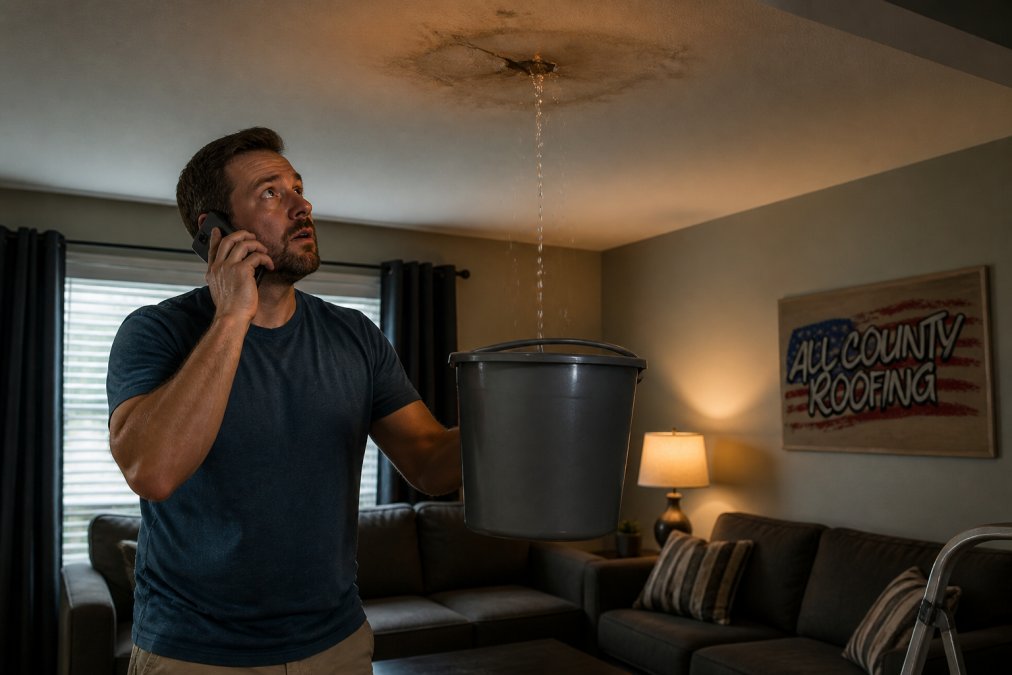
If the ceiling is bulging with trapped water, carefully puncture the bulge with a small hole to release pressure. This sounds counterintuitive, but a controlled release prevents a sudden collapse that could injure someone or cause worse damage.
Then call a roofing contractor. A fast response time limits water damage mitigation costs and reduces the chance of mold growth.
Temporary Roof Leak Repair Methods
Temporary roof leak repair methods buy you time until a professional can make permanent repairs. The goal is not to fix the roof, it is to stop water from entering and to keep the damage from spreading. Understanding the difference between a temporary fix and a permanent repair matters, because a tarp or a bead of sealant that looks fine after a storm will fail within weeks if it is treated as a finished job.
Temporary vs. Permanent: Know Which One You Are Doing
A temporary repair is designed to shed water for days to a few weeks. It uses surface-applied materials that sit on top of the existing roof: tarps, peel-and-stick patch tape, plastic cement, and sealant. A permanent repair removes and replaces the failed component, shingles, underlayment, flashing, or decking, and restores the roof to a watertight, warrantable condition. Insurance adjusters and manufacturers both distinguish between the two, and a temporary patch that is never followed by a permanent repair can void a shingle warranty.
Method 1: Emergency Tarping
Tarping is the most reliable temporary option for significant damage, and it is the method most roofing crews use on storm calls.
- Choose the right tarp. A minimum 6-mil polyethylene tarp is standard; heavier 10- to 12-mil woven tarps last longer in wind. The tarp should extend at least 4 feet past the damaged area on every side.
- Run the tarp over the ridge. Drape it so the top edge crosses the peak of the roof, not just the damaged slope. Water that gets under a tarp edge will travel down the roof deck and find the same leak.
- Secure without nails through the field. Fasten with 2×4 lumber laid flat along the edges and screwed into the deck, or with sandbags and weighted boards. Nailing through the middle of a tarp creates new holes and new leaks.
- Check the pitch. On a low-slope roof, overlap tarp seams by at least 12 inches and run them with the slope, never against it.
A properly installed tarp can shed water for several weeks, but UV exposure degrades polyethylene, so treat it as a bridge to a permanent repair, not a solution.
Method 2: Roofing Cement and Patch Tape
For small cracks, punctures, and lifted shingle tabs, roofing cement and self-adhering patch tape can seal a leak in minutes.
- Clean the area first. Cement and tape do not bond to wet, dirty, or mossy surfaces.
- Press the patch firmly and work it into the surface with a roller or putty knife.
- Overlap the patch at least 2 inches past the edge of the damage on all sides.
- Do not apply patch tape over a wet surface or in temperatures below the manufacturer’s minimum, most products require 40°F or higher.
Method 3: Flashing Sealant
Flashing failures around chimneys, vents, skylights, and valleys are a common source of leaks. A bead of polyurethane or silicone sealant applied to the joint can stop water temporarily. This is a stopgap: sealant shrinks, cracks, and pulls away from metal over time, and the underlying flashing still needs to be replaced.
Method 4: Interior Water Channeling
When you cannot get on the roof, you can still control where the water goes inside. Staple plastic sheeting to ceiling joists so it slopes toward a bucket or a bathtub, and puncture a bulging ceiling in a controlled spot to release trapped water. This does not repair anything, it protects your floors, furniture, and drywall until the roof can be addressed.
Never attempt temporary repairs on a wet, steep, or icy roof. Falls are the leading cause of serious injury in roofing work, and a wet shingle surface offers almost no traction. If you cannot reach the damage safely from a ladder or a low-slope section, stay off the roof and call a professional.
Average Cost to Repair a Roof Leak
The average cost to repair a roof leak depends on how much damage exists, what the roof is made of, and how accessible the leak is. The cost to repair a roof leak depends on how much damage exists, what the roof is made of, and how accessible the leak is. The table below breaks down common repair types and the factors that move the price up or down.
| Repair Type | Typical Range | What Drives the Price |
|---|---|---|
| Shingle patch (small area) | $150 – $400 | Number of shingles, matching existing material |
| Flashing repair (chimney, vent, valley) | $200 – $600 | Access, extent of corrosion, whether counter-flashing must be replaced |
| Flat roof membrane patch | $300 – $800 | Membrane type (EPDM, TPO, modified bitumen), seam work |
| Leak around a skylight | $300 – $900 | Whether the skylight must be removed and reset |
| Decking replacement (per sheet) | $400 – $1,200 | Extent of rot, whether the sheet is structural |
| Emergency tarping (standalone) | $300 – $800 | Roof height, pitch, size of area covered |
| Full section replacement (10×10) | $800 – $2,500 | Material, underlayment, flashing integration |
What Actually Moves the Number
- Access and height. A two-story roof with a steep pitch requires more safety equipment, more time, and often a second crew member. That labor shows up in the estimate.
- Material matching. If your shingles are discontinued, the contractor may need to source a close match or replace a larger area so the repair is not visually obvious.
- Hidden damage. A leak that has been running for weeks often means rotted decking and saturated underlayment. The visible repair is the cheap part; the hidden repair is where the cost lives.
- Emergency timing. After-hours, weekend, and storm-response calls commonly carry a premium because the crew is being pulled from scheduled work. Ask upfront whether the emergency rate differs from the standard rate.
- Insurance deductible. If the damage is storm-related, your homeowner’s policy may cover the repair minus your deductible. Know your deductible before you authorize work, because a repair that costs less than the deductible is one you pay for yourself.
How to Read an Estimate
A written estimate should itemize labor, materials, disposal, and any emergency premium separately. Be cautious of a single lump-sum number with no breakdown, it makes it impossible to compare bids or to know what changed if the scope grows once the roof is opened. Ask whether the price includes replacing underlayment and flashing, or only the visible surface.
Get the estimate in writing before work begins, even for an emergency. A reputable contractor will put the scope, price, and timeline on paper and will not ask for full payment upfront.
For accurate pricing on your specific roof, request a detailed quote from a licensed and insured roofing contractor after an on-site inspection.
How to Find a Reliable Emergency Roofer
Finding a reliable emergency roofer means verifying credentials before you commit. In a crisis, it’s tempting to call the first company that answers. That’s exactly when homeowners get taken advantage of.
Here’s what to check:
- Licensing and insurance – Ask for their license number and verify it with your state’s contractor board. All County Roofing Inc. holds ID RCE 56891 and OR CCB 240085.
- Manufacturer certifications – Certified contractors can offer stronger roof warranties. All County Roofing Inc. is a Versico Authorized Contractor.
- Local presence – A local roofing professional can respond quickly and stands behind their work in the community.
- Written estimates – Never accept verbal quotes for emergency work.
- References and reviews – Look for recent customer feedback about emergency response.
The Better Business Bureau’s contractor hiring guidelines recommend getting at least two estimates when time allows, even for urgent repairs.
The contractor who answers at 2 AM and shows up within an hour is worth more than the one who promises a lower price next week. Fast response time during an emergency prevents thousands in secondary damage.
Safety Hazards for Homeowners
Safety hazards for homeowners during roof emergencies are real and often underestimated. Every year, homeowners are injured attempting repairs they shouldn’t attempt.
The most serious risks include:
- Falls from height – The leading cause of construction fatalities, according to the [Occupational Safety and Health Administration’s fall protection resources(/home/resources/) | osha.gov]
- Electrocution – Water and downed power lines near roof damage create lethal combinations
- Structural collapse – Walking on a compromised roof deck can trigger failure
- Mold exposure – Water damage mitigation should begin within 24-48 hours to prevent mold growth
Stay off the roof. Period. Your job is to contain interior damage and call a professional. Their job is everything else.
Insurance Documentation Checklist
Insurance documentation makes or breaks your claim. Most homeowners discover too late that they didn’t capture the right evidence. Use this checklist immediately after discovering damage:
- Photos of the leak from inside, showing water damage
- Photos of the damaged area from the ground (use zoom)
- Video walkthrough of affected rooms
- Date and time the damage was first noticed
- List of damaged personal property with estimated values
- Receipts for any emergency supplies purchased (tarps, buckets, fans)
- Written estimate from a licensed roofing contractor
- Copy of your homeowner’s insurance policy
- Claim number and adjuster contact information once filed
- Records of all communication with your insurer
File your claim promptly. Most policies have time limits for reporting storm damage and water intrusion.
Conclusion
A roof emergency tests your judgment under pressure. The homeowners who fare best are the ones who act quickly, document thoroughly, and call professionals instead of climbing ladders themselves.
When water is coming through your ceiling, you need a team that shows up and finishes the job. All County Roofing Inc. provides honest assessments, manufacturer-certified installations, and detailed quotes with project timelines. As a Versico Authorized Contractor with decades of experience across Southwestern Idaho and Eastern Oregon, we handle everything from emergency tarping to full replacements. Get an estimate from All County Roofing Inc. and protect your property with workmanship that lasts.
Frequently Asked Questions
What should I do immediately after discovering a roof leak?
Move furniture and electronics away from the leak, place a bucket underneath, and if safe, go into the attic to contain the drip with a bucket or towel. Avoid climbing onto the roof in wet conditions. Call a licensed emergency roof repair company, and take photos of the damage for your insurance claim. If water is near electrical outlets or fixtures, turn off power to that area and call an electrician.
What is the average cost to repair a roof leak?
The average cost to repair a roof leak varies widely based on roof material, pitch, accessibility, and the extent of damage. For an accurate estimate, request a detailed quote from a licensed roofing contractor who inspects the damage first.
Does homeowners insurance cover emergency roof repairs?
Most homeowners insurance policies cover sudden damage from storms, hail, wind, or fallen trees, but not damage from neglect or normal wear and tear. To support your claim, document everything with photos and receipts, keep a repair log, and file promptly. Your insurer may require a professional roof inspection report. Review your policy or contact your agent to confirm coverage before scheduling permanent repairs.
Can a roof be repaired in a day?
Many emergency roof repairs, such as patching a leak, replacing a few shingles, or repairing flashing, can be completed in a day. However, if the damage is extensive, involves structural issues, or requires special order materials, it may take longer. A reputable emergency roofer will give you a clear timeline upfront and may apply a temporary fix first to stop water intrusion, then return for permanent repairs.


